
Co-Active Neuroscience
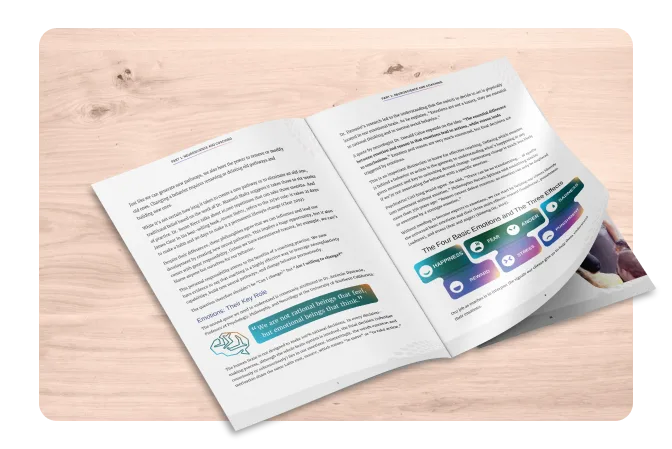
How Coaching Changes Your Brain
Neuroscience research shows that coaching rewires the brain through neuroplasticity, building new neural pathways that lead to lasting behavioral change. This report explains how and why.
Written by Carlos Davidovich, MD, neuromanagement expert and executive coach. Published by Co-Active Training Institute. Fill out the short form below to download your FREE copy of the report:
Key Findings from the Neuroscience Research
Dr. Davidovich’s research connects the Co-Active Coaching Model to current brain science across five areas of impact on coaching clients.
Co-Active Training Institute offers Deepend the Work in two fulfillment tracks: Fast Track and Flex Track. They’re designed to provide the pace and consistency that’s best for someone’s work, learning style, and life.

Neural Network Activation in Coaching
The report maps how different coaching interventions activate specific neural networks, including the Default Mode Network (linked to daydreaming, intuition, and insight), the Task Positive Network (linked to focus and action), and the Salience Network (linked to emotional processing and decision-making).

Emotional Regulation Through Neural Pathways
Coaching helps clients work through their neural pathways, engaging the Salience Network to identify, organize, and channel emotions. The report explains how emotions are the doorway to consistent change and why creating space for emotional processing leads to personal and professional growth.

Brain Plasticity and Behavioral Change
The Co-Active Coaching Model helps develop new neural pathways by encouraging new behaviors and thought patterns. The report explores how vision-led practices, reframing techniques, and embodiment exercises activate the brain’s change mechanisms and trigger neuroplasticity.

Trust, Oxytocin, and the Coaching Relationship
The Co-Active Model emphasis on building trust induces the release of oxytocin, which promotes relaxation, psychological stability, and reduced stress responses. This keeps the amygdala calm and prevents the activation of defensive mechanisms, making clients more open to new perspectives.

Somatic Intelligence and Embodiment
The report explains how the body’s autonomic nervous system connects the brain with the rest of the body through stress and relaxation responses. Effective embodiment techniques activate the parasympathetic system, the body’s built-in counterbalance to stress, which supports deeper self-awareness and lasting change.

Whole-Person Development and Brain Science
The research demonstrates that humans are made up of physical and energetic parts that work together as a whole. Leaving any part out means missing a vital piece. The Co-Active Model’s whole-person approach aligns with how the brain actually processes change, engaging cognitive, emotional, and somatic systems together.
Neuroplasticity
Why Coaching Produces Lasting Behavioral Change
Neuroplasticity is the brain’s ability to form new neural connections throughout life. First described by Dr. Ernest Lugaro in 1906, and backed by research since the 1970s, neuroplasticity means the brain adapts whenever we learn something new, practice a new behavior, or experience something for the first time.
The key principle is “fire together, wire together.” When certain neurons keep firing at the same time, they build a physical connection and form a new pathway in the brain. Coaching works because it creates the conditions for this to happen. Through repeated practice of new thought patterns, emotional processing, and embodied awareness, coaching helps clients build neural pathways that support the changes they want to make.
For a new pathway to take hold, the new experience needs to happen on a continued basis. Repeated experiences cement the new learning. This is why coaching produces lasting change where one-time workshops or motivational talks often do not.

About the Researcher
Carlos Davidovich, MD
Dr. Carlos Davidovich is a neuromanagement expert and executive coach whose research connects the science of the brain to the practice of coaching. In this report, he draws on established neuroscience research to explain why the Co-Active Coaching Model produces the results practitioners have been seeing for over three decades.
Go Deeper into Neuroscience and Coaching
Explore more about how brain science informs the coaching process and why behavioral change is both possible and hard.

The Neuroscience of Change
How the brain builds new pathways and what that means for anyone going through a period of personal and professional growth.

People Aren’t Broken
Why the Co-Active cornerstone that “People are Naturally Creative, Resourceful, and Whole” aligns with what neuroscience tells us about the brain.

What Neuroscience Reveals About Coaching, Emotion, and Why Behavioral Change Is So Hard
The science behind why change is difficult, how emotions drive behavior at the neurological level, and what effective coaching does about it.
Neuroscience and Coaching: FAQ
How does coaching change your brain?
Coaching changes the brain through neuroplasticity, the brain’s ability to form new neural connections throughout life. When a coach guides a client through repeated new experiences, thoughts, and behaviors, specific neurons fire together and eventually wire together, building new neural pathways. Dr. Davidovich’s research shows that the Co-Active coaching model activates key neural networks including the Default Mode Network, Task Positive Network, and Salience Network, creating the conditions for lasting behavioral change.
What is neuroplasticity in coaching?
Neuroplasticity in coaching refers to the brain’s capacity to reorganize and form new neural connections in response to the coaching process. When clients engage in new behaviors, reframe perspectives, and practice embodiment techniques during coaching, they activate neuroplasticity and build new pathways in the brain. This is why coaching produces lasting change rather than temporary motivation.
What are neuroscience-based coaching methods?
Neuroscience-based coaching methods are coaching approaches grounded in research about how the brain processes change, emotion, and learning. These methods include working with embodiment techniques to activate the parasympathetic nervous system, using vision-led practices that engage the brain’s occipital region to drive behavior, facilitating emotional processing to activate appropriate neural networks, and creating trust-based coaching relationships that release oxytocin and reduce stress responses.
What is the connection between the Co-Active Model and neuroscience?
The Co-Active Model aligns with neuroscience research across its three core principles. Fulfillment works with vision-led behaviors that activate the brain’s vision centers. Balance works with reframing that engages the Salience Network. Process works by holding space for emotions, allowing clients to work through the Default Mode Network. Dr. Davidovich’s research demonstrates how the Co-Active approach activates the brain mechanisms needed for lasting transformation, including neuroplasticity, emotional regulation, somatic intelligence, trust building, and empathy development.